
Cumberland Stablecoin Commentary: August 16th
Author: Paul Kremsky | 5-minute read | August 16, 2026
Theme: General Drawdown in Stablecoin Market Cap
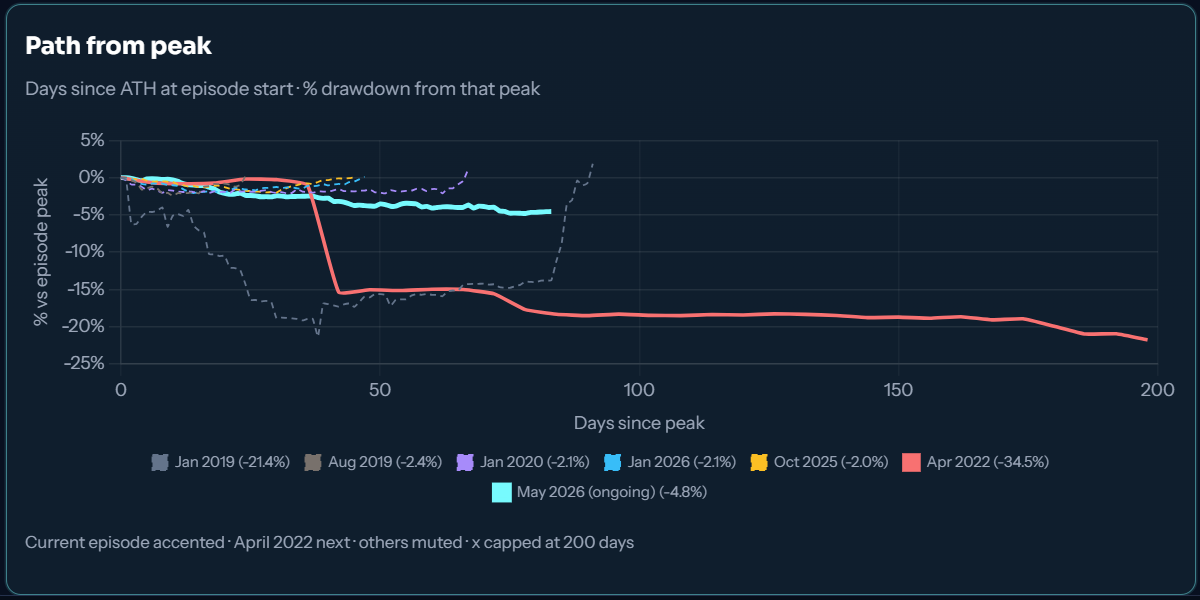
Since May 20, the stablecoin market cap has shrunk from around $321B to about $305B. While stablecoin price action has not been dramatic, this ~5% drawdown is actually the third largest in the industry's history. The first was the drawdown in April 2022, which famously started with the wipeout of $16B of UST. The 2022 drawdown lasted over a year, and it was driven by fundamental questions about the stablecoin industry; the collapse of UST was followed by a selloff and wave of redemptions on USDT, and in early 2023, the collapse of Silicon Valley Bank, Silvergate, and Signature Bank impacted USDC.
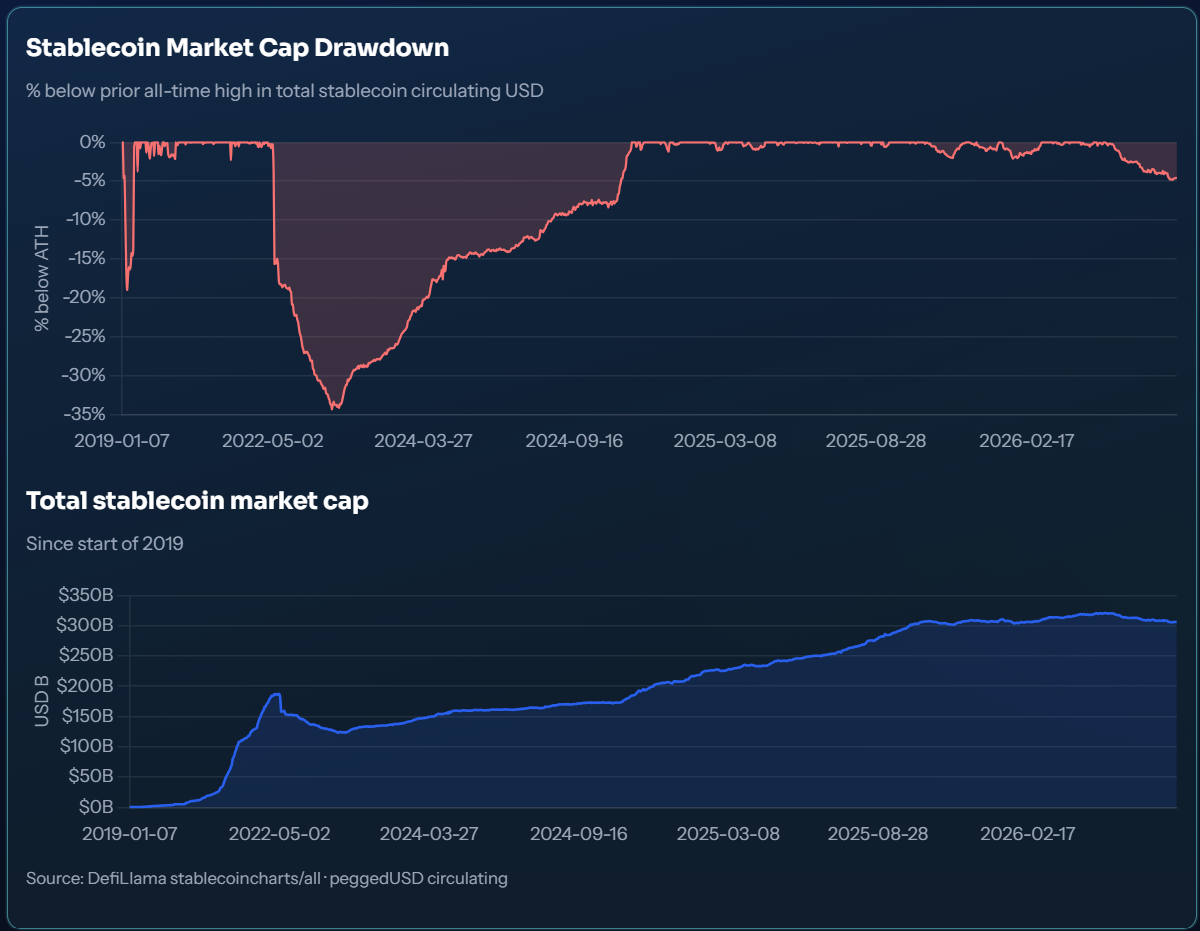
Other drawdowns in stablecoin market cap, such as the 20% drop in 2019, were marked by price depegs. In 2019, USDT traded briefly below $0.96 and stayed below $0.99 for a prolonged period; by 2022, the market was more efficient, and even with the size and rapid pace of the redemptions, USDT didn't trade below $0.995 — compare the paths from peak.
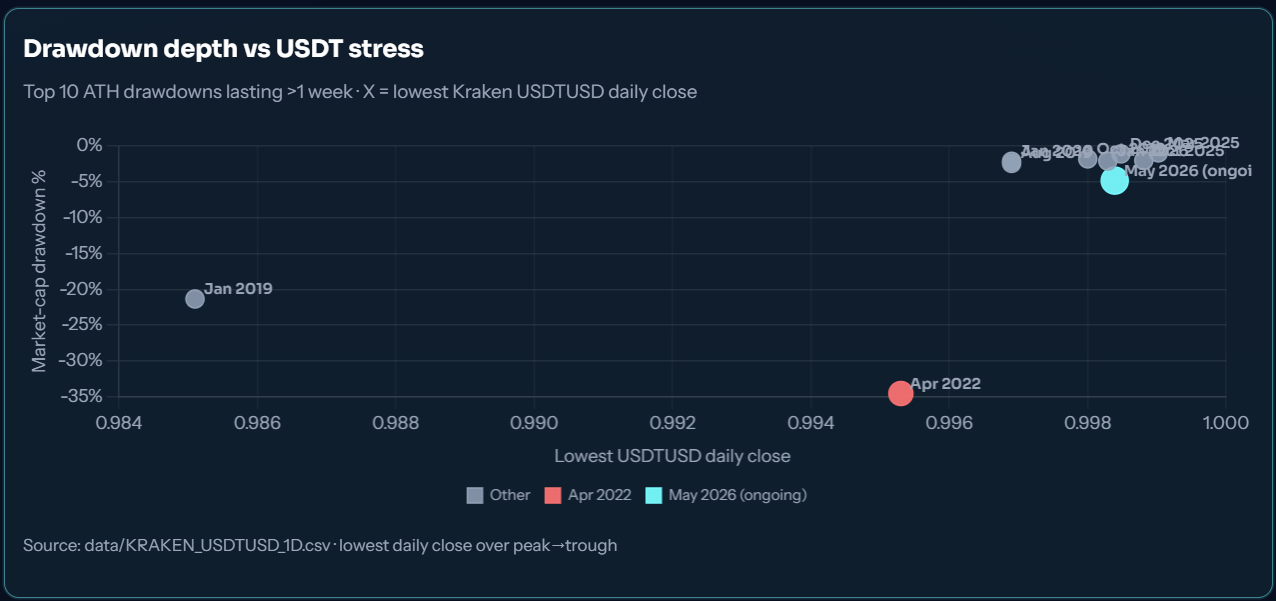
In the current drawdown, USDT has mostly traded in a range between $0.9988 and $0.9992, while USDC has for the most part traded above $0.9997 — these represent almost no discount whatsoever, and cannot be labeled a "depeg" by any definition. This drawdown does not appear to be a function of the stablecoins themselves; just two weeks ago, Tether released its financials, showing a buffer of over 2%, and it did not garner much attention. Circle, of course, is a publicly traded company that files its financials on a regular basis, and the stock actually rallied 10% in the past week. Instead, this selloff appears to be a fairly orderly off-ramping of crypto from crypto markets.
Theme: Increase in Yield-Bearing Onchain Cash Equivalents
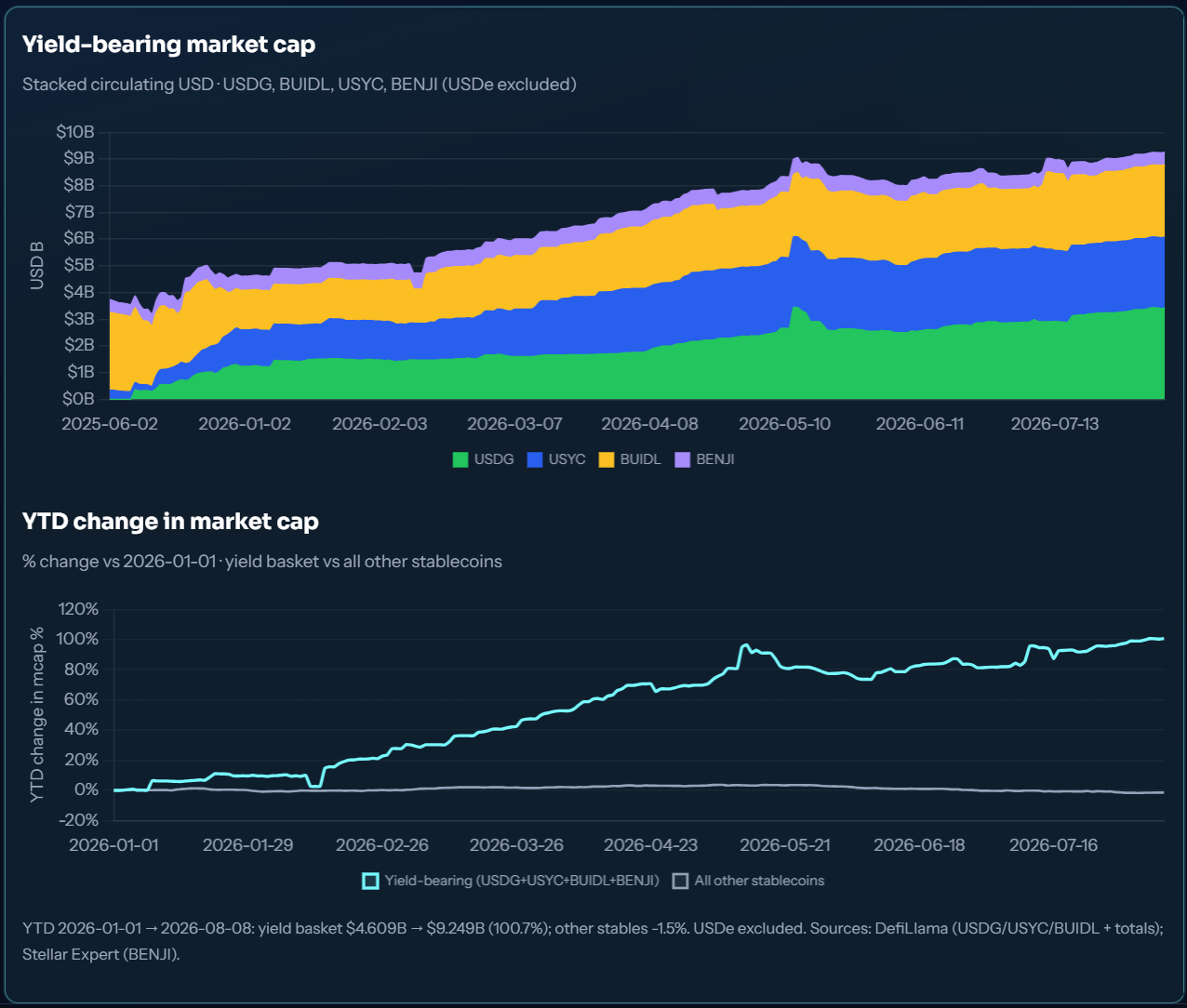
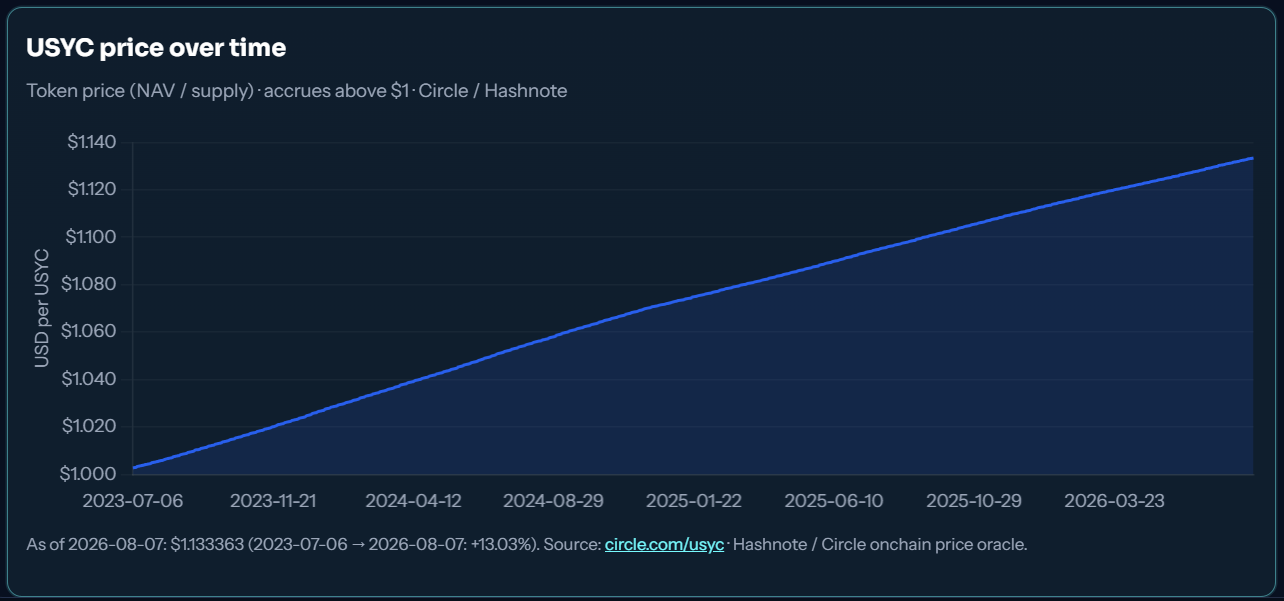
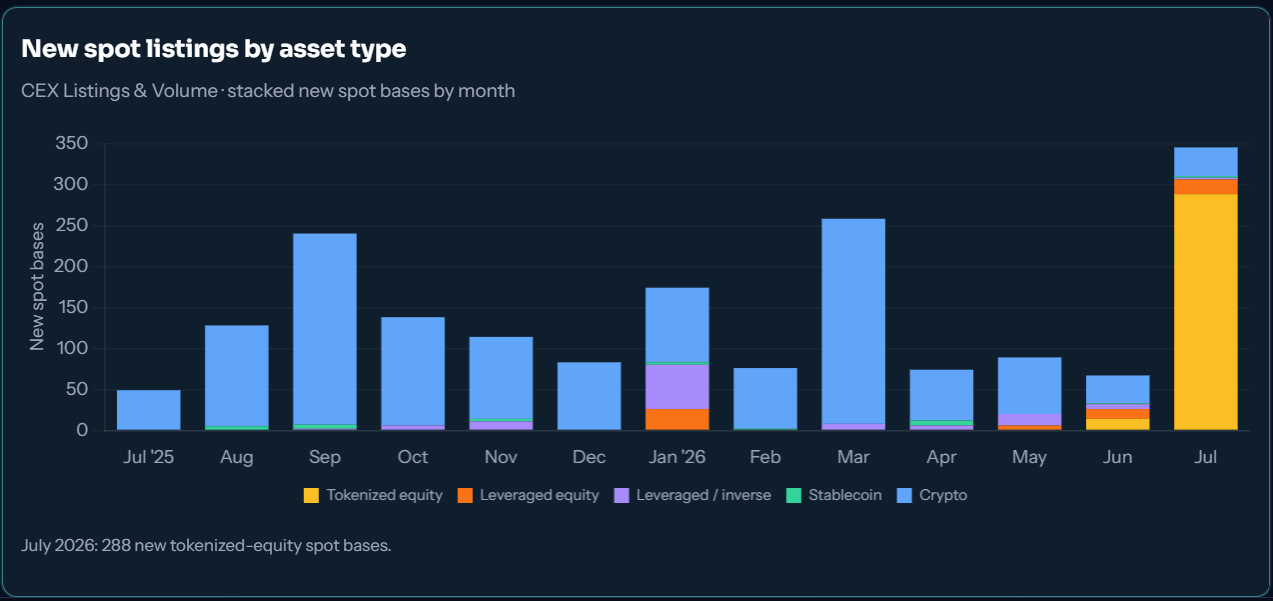
While the overall stablecoin market cap has been in decline, there's been widespread growth in yield-bearing onchain cash equivalents, which have grown by 101% since the start of the year. This is not inconsistent with the trend of off-ramping from crypto. Because many of these products are financial instruments, and because some of them do not trade for $1 (but instead accrue price over time), they are actually poor assets for trading digital assets. Flows into these stablecoins represent a move away from crypto tokens, but a move which keeps the assets on digital rails. Again, this is consistent with other trends we're seeing in the industry. Even as token prices have declined in 2026, we have seen a growth in the usage of digital rails for trading other asset classes, including equities, commodities, and FX, on venues such as Hyperliquid, Polymarket, and even centralized exchanges like Kraken, which listed nearly 300 equities in July. Stablecoin rails are being used for yield-generation even as stablecoin usage in crypto trading has decreased.
Read More: Cumberland's 2024 research paper on Tokenized Money Funds
Theme: Signs of Life in Non-USD Stablecoins
At Cumberland, we've been talking about Non-USD stablecoins for years (The Growth Potential of Non-USD Stablecoins). This year, we're finally starting to see some signs of life, with Non-USD stablecoins now representing over $1.5b of market cap, up from $1.3b to start the year. As mentioned above, one of the major themes for the year is a movement of traditional financial use-cases to blockchain rails, and stablecoin FX is no exception. There are a growing number of blockchains which focus exclusively on stablecoins, including Tempo and Arc, which Circle announced would launch on September 16th. Separately, a renewed push by European regulators on MiCA enforcement has increased the focus by centralized exchanges to support EMI-licensed stablecoin issuers. The dominant currency here, to date, is EUR, which has grown from $658m at the start of the year to $756m today. Interestingly, on Cumberland's OTC desk, we have seen a much sharper rise, with OTC counterparties increasingly trading EURC vs USDC.
Note: OTC Stablecoins Availability
Stablecoins mentioned in this report may be available for trading via Cumberland's OTC desk, depending on jurisdictional availability, including USDC, USDT, SOFID, and USDPT, as well as multiple Non-USD stablecoins.
Cumberland's OTC Stablecoin desk allows for stablecoin-stablecoin trades, as well as on- and off-ramping.
Legal Disclosure
The information (“Information”) provided by the Cumberland group of companies (collectively, “Cumberland”), either in this document or otherwise, is for informational purposes only and is provided without charge. Cumberland is a principal trading firm; it is not and does not act as a fiduciary or adviser, or in any similar capacity, in providing the Information, and the Information is not and may not be relied upon as investment, financial, legal, tax, regulatory, or any other type of advice. The Information has not been prepared or tailored to address, and may not be suitable or appropriate for the particular financial needs, circumstances, or requirements of any person, and it should not be the basis for making any investment or transaction decision. THE INFORMATION IS NOT A RECOMMENDATION TO ENGAGE IN ANY TRANSACTION.
If any person elects to enter into transactions with any Cumberland entity, whether as a result of the Information or otherwise, Cumberland will enter into such transactions as principal only and will act solely in its own best interests, which may be adverse to the interests of such person. Before entering into any such transaction, you should conduct your own research and obtain your own advice as to whether the transaction is appropriate for your specific circumstances. In addition, any person wishing to enter into transactions with any Cumberland entity must satisfy Cumberland’s eligibility requirements. Cumberland may be subject to certain conflicts of interest in connection with the provision of the Information. For example, Cumberland may, but does not necessarily, hold or control positions in the cryptoasset(s) discussed in the Information, and transactions entered into by Cumberland could affect the relevant markets in ways that are adverse to a counterparty of Cumberland. Cumberland may engage in transactions in a manner inconsistent with the views expressed in the Information.
Cumberland makes no representations or warranties (express or implied) regarding, nor shall it have any responsibility or liability for the accuracy, adequacy, timeliness, or completeness of, the Information, and no representation is made or is to be implied that the Information will remain unchanged. Cumberland undertakes no duty to amend, correct, update, or otherwise supplement the Information.
The virtual currency industry is subject to a range of risks, including but not limited to: price volatility, limited liquidity, limited and incomplete information regarding certain instruments, products, or cryptoassets, and a still emerging and evolving regulatory environment. The past performance of any instruments, products, or cryptoassets addressed in the Information is not a guide to future performance, nor is it a reliable indicator of future results or performance. Investing in virtual currencies involves significant risks and is not appropriate for many investors, including those without significant investment experience and capacity to assume significant risks.
This information is only directed at persons who have professional experience in matters relating to investments and who fall within the definition of “accredited investors” as defined in Securities and Futures Act 2001, namely sections 4A (1)(a)(i) and (ii) and "investment professionals" as defined in Article 19(5) of the UK Financial Services and Markets 2000 (Financial Promotion) Order 2005 (as amended). Persons who would be classified as “retail clients” (as defined in the Financial Conduct Authority Handbook) must not rely on this information. Counterparties are informed that, where transactions in cryptoassets with Cumberland are arranged by or with the involvement of our affiliate DRW Global Markets Ltd, an entity incorporated in the UK and authorised by the Financial Conduct Authority in respect of its provision of investment services, that the rules made under the Financial Services and Markets Act 2000 for the protection of retail clients do not apply, and neither the UK’s Financial Ombudsman Service nor the Financial Services Compensation Scheme will apply to such transactions.
Cumberland New York LLC is licensed to engage in virtual currency business activity by the New York State Department of Financial Services.
Cumberland SG Pte Ltd
The Monetary Authority of Singapore (“MAS”) requires Cumberland SG Pte. Ltd. ("CSG") to provide this risk warning to you. Before you pay or transfer your Digital Payment Token (“DPT”) service provider any money or DPT, you should be aware of the following:
- CSG is licensed by MAS to provide DPT services. Please note that this does not mean you will be able to recover all the money or DPTs you paid to your DPT service provider or any other third party referred to above, if the DPT service provider’s or the third party’s business fails.
- You should be aware that MAS does not supervise or regulate your DPT service provider for the provision of unregulated services. This includes any service of trading digital payment token derivatives such as futures.
- You should not transact in a DPT if you are not familiar with the DPT. This includes how the DPT is created, and how the DPT you intend to transact is transferred or held by your DPT service providers.
- You should be aware that the value of DPTs may fluctuate greatly. You should buy DPTs only if you are prepared to accept the risk of losing all of the money you put into such tokens.
- You should be aware that your DPT service provider, as part of its license to provide DPT services, may offer services related to DPTs which are promoted as having a stable value, commonly known as “stablecoins.”
This information is only directed at persons who have professional experience in matters relating to investments and who fall within the definition of “accredited investors” as defined in Securities and Futures Act 2001, namely sections 4A (1)(a)(i) and (ii).
Asset Safeguarding Disclosures
1. Safeguarding of Settlement Obligations
CSG safeguards settlement obligations in accordance with the Payment Services Act 2019 and the Payment Services Regulations 2019. Such safeguarding applies solely in respect of settlement obligations arising from transactions with counterparties that are not completed on a same-day (“T+0”) basis. For these obligations, CSG maintains a buffer through the use of a bank guarantee issued by a financial institution approved by the Monetary Authority of Singapore (“MAS”) which is intended to ensure that the value of settlement obligations extending beyond T+0 remains protected in the event of CSG’s insolvency. The bank guarantee constitutes a direct and enforceable undertaking by the issuing bank to satisfy the covered settlement obligations if CSG is unable to meet them.
2. Risks
The bank guarantee serves as a prudential buffer and may not at all times correspond to the full value of outstanding settlement obligations. In addition, the bank guarantee is contingent on the financial standing of the issuing bank and in the unlikely event of the issuing bank’s insolvency, there may be delays in the recovery of amounts secured by the guarantee, and such recovery would be subject to the insolvency regime of the jurisdiction in which the bank is incorporated.
CSG has sought to mitigate these risks by maintaining ongoing oversight of the safeguarding arrangement, including the amounts being safeguarded and selecting a reputable financial institution approved by MAS as the issuing bank.